Twelve trees poisoned at Burnt Cedar Beach, in a pattern going back to 2022
By Morgan Linton
The vandalism at Burnt Cedar Beach is far more extensive than first reported. Twelve trees have now been poisoned, and the damage is not new: trees at the beach have been poisoned every year since 2022, with the number climbing each season.
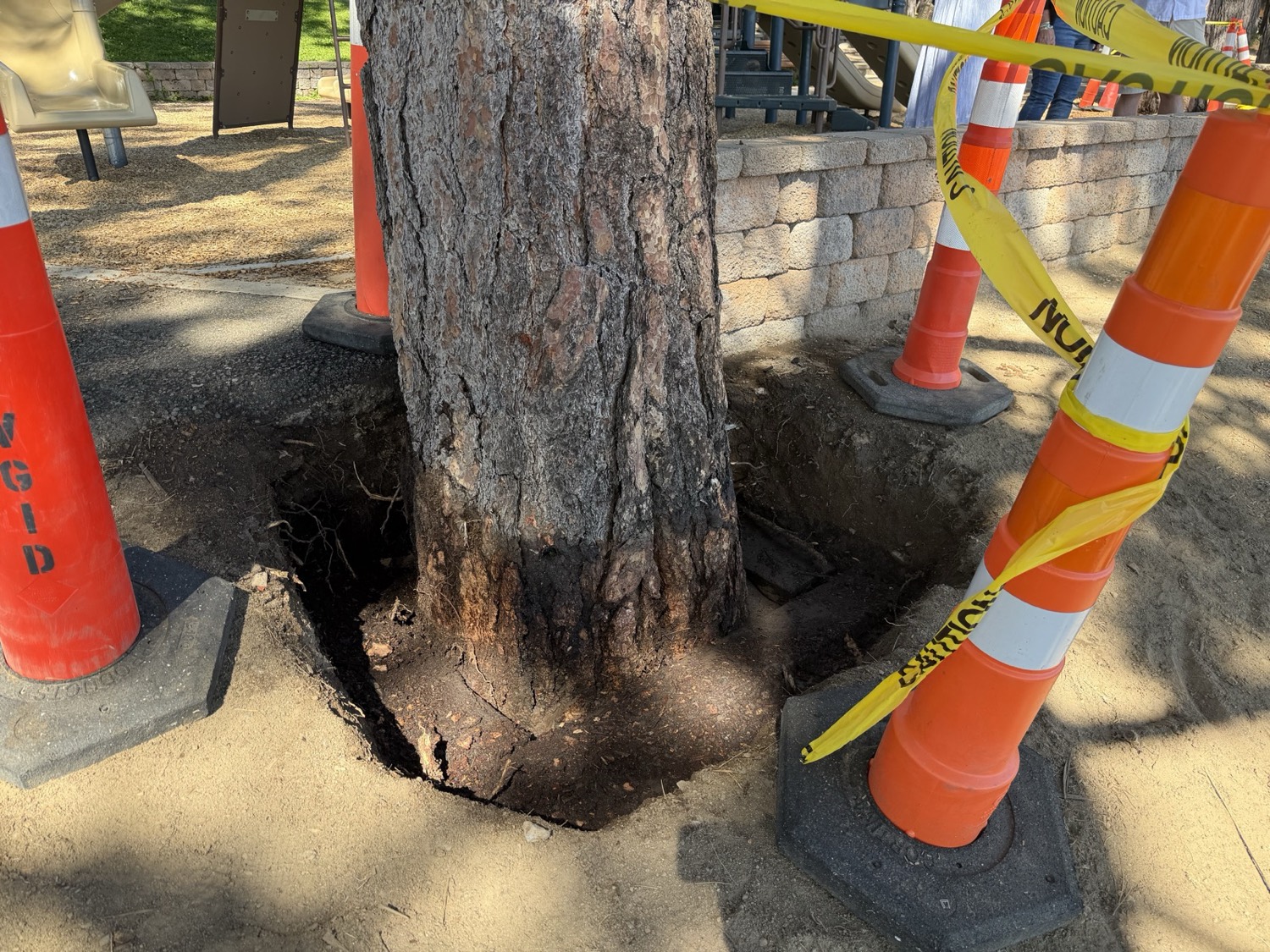
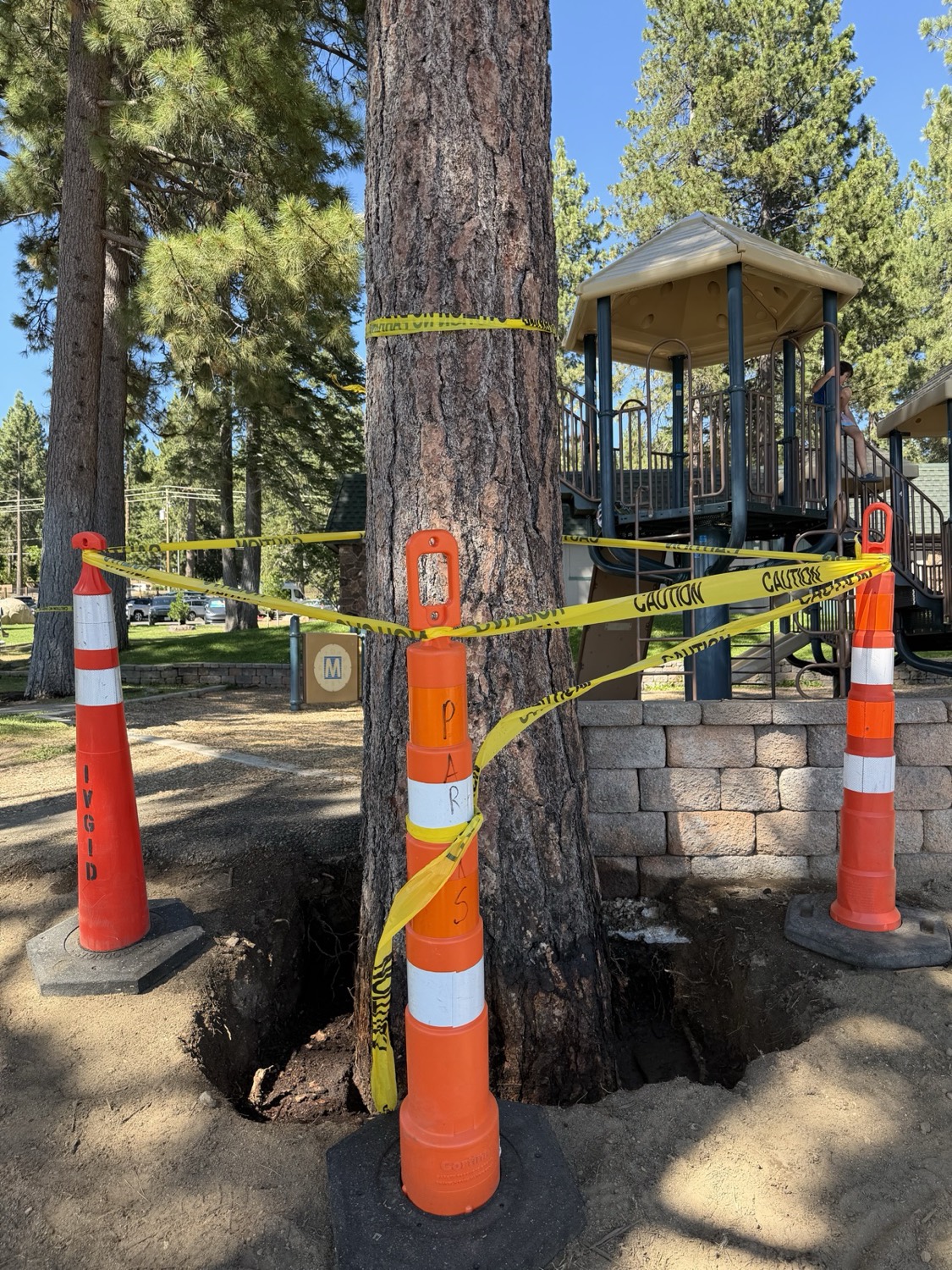
At the beach this week the damage is hard to miss. Wide pits have been dug out around the base of the affected trees, exposing bare roots and dark, saturated soil. IVGID has ringed the worst of them with caution tape and parks cones, including one large pine standing a few feet from the playground. Stand anywhere near the trees and you can smell fuel.
The method has been consistent. Whoever is doing this digs out the ground around a trunk to expose the root flare, then pours fuel into the excavation — the initial reports described diesel, and the smell lingers at the site for weeks. It is a slow way to kill a tree. A mature pine poisoned at the roots can take months or years to die, often holding its needles through a season before it goes.
IVGID has tried to catch whoever is responsible. At least one camera was installed to watch the area. According to three people familiar with the situation, that effort failed in a way that suggests the vandals knew exactly what they were up against: they found the camera and shined flashlights directly into the lens, washing out any usable footage.
Those same three people, speaking separately, believe the motive is the view. Each pointed toward the houses across the street from the beach, where the pines stand between the homes and the water. That theory is widely held among people who have followed the vandalism, but it remains a theory. No evidence has been made public tying the poisonings to any particular property, no suspect has been named, and there are no active leads. No one has been arrested or cited.
What is not in dispute is the loss. These are mature pines of the kind that take generations to grow, and they give Burnt Cedar its shade and much of its character. A tree killed this way cannot be replaced in any meaningful sense within a human lifetime — a replanted sapling is decades from doing the same job. Because Burnt Cedar is an IVGID facility, the cost of removal, replacement, and monitoring lands on Incline Village residents, as does the risk: dead and dying trees near a playground and picnic areas eventually have to come down.
For neighbors and beachgoers, the most useful thing is attention. The work appears to happen at night, it requires digging, and it leaves a smell that carries. If you see someone working around the base of a tree at Burnt Cedar after hours, or you notice fresh excavation, report it to IVGID and to the Washoe County Sheriff's Office rather than confronting anyone.
This story is still developing, and we are continuing to report it. If you know something about the poisonings — or have seen something at the beach that didn't add up — get in touch at hello@visitinclinevillage.com. We will withhold your name on request.